Exploring the Future of Self-Storage
With Faith Soh, Executive Director, Southeast Asia, CLI and Chief Operating Officer, ESA
12 Jun 2025
Share


CapitaLand Group
With a solid business ecosystem, we deliver long-term sustainable value to our stakeholders.
Global
English

CapitaLand Group
With a solid business ecosystem, we deliver long-term sustainable value to our stakeholders.
CapitaLand Group
With a solid business ecosystem, we deliver long-term sustainable value to our stakeholders.
With Faith Soh, Executive Director, Southeast Asia, CLI and Chief Operating Officer, ESA
12 Jun 2025
Share
In today’s fast-paced world, enhancing customer experience and embracing innovation are key ingredients for long-term business success. Extra Space Asia (ESA) exemplifies this approach by focusing on optimising customer journeys and integrating smart technologies within the self-storage sector.
In October 2022, CapitaLand Investment (CLI), together with APG Asset Management N.V., the investment manager for the largest pension provider in the Netherlands, acquired ESA through a joint venture. This move provides CLI with access to a growing sector that supports the expansion of its funds under management.
ESA is Asia’s dominant operator in self-storage solutions with close to 100 facilities across seven gateway cities – Hong Kong, Kuala Lumpur, Osaka, Seoul, Singapore, Taipei and Tokyo. Its portfolio comprises more than 2.3 million square feet of gross floor area with an occupancy of over 90%. In 2024, ESA acquired two industrial assets in Singapore which have been converted into self-storage facilities and established a strategic partnership with Ambitious Co. Ltd., Japan’s largest indoor self-storage manager, to acquire four self-storage properties in Osaka.
We sat down with Faith Soh, Executive Director, Southeast Asia, CLI and Chief Operating Officer, ESA to gain insights into how ESA is navigating industry challenges, leveraging technology and futureproofing for a sustainable future.
Faith played a key role in establishing the partnership with APG and facilitating the acquisition of ESA. Since taking on the COO role in 2024, she has been responsible for overseeing operations and guiding strategic initiatives across ESA’s multi-country portfolio. Faith emphasises the importance of cultural sensitivity, clear communication, and data-driven decision-making in managing diverse teams. Based in Singapore, she regularly visits regional offices to foster collaboration and strengthen team relationships. Company-wide retreats are also organised to encourage knowledge sharing and team bonding among staff.
ESA is Asia’s dominant self-storage operator, with nearly 100 facilities in seven gateway cities.
The demand for self-storage is primarily driven by urbanisation, smaller living spaces, and the increasing need for flexible storage solutions. With people relocating more frequently, and businesses, especially small medium-sized enterprises (SMEs) seeking additional space for inventory and archival purposes, the sector has seen steady growth.
The Self Storage Association Asia (SSAA) reported a 14% surge in demand from business users in Singapore who now represent 40% of the market, up from 26% in 2023[1]. Individual users constitute the remaining 60% of the market share. This increase in business users is driven by two key factors – the return-to-office trend and the growth of e-commerce. As businesses adapt to a shifting landscape, many are leveraging self-storage solutions to optimise space and streamline operations. In response, operators are expanding their offerings with value-added services such as valet storage, enabling business owners to avoid the time-consuming task of visiting storage facilities, thus offering greater convenience and efficiency.
Due to the consistent demand from both individuals and businesses, self-storage is a stable income-generating business. “Customers typically store their items for three to five years, with some business customers storing them for more than 10 years,” says Faith. “These long-term relationships reflect the trust our customers place in us.”
“We have had customers store unique items from musical instruments to collectible art and antiques, vintage fashion, and other collectibles,” Faith shares. “Whether personal, sentimental, or professional, these items are often stored as way to preserve memories and celebrate accomplishments. They are a tangible connection to a memory or milestone, ready to be cherished when the time comes to revisit them.
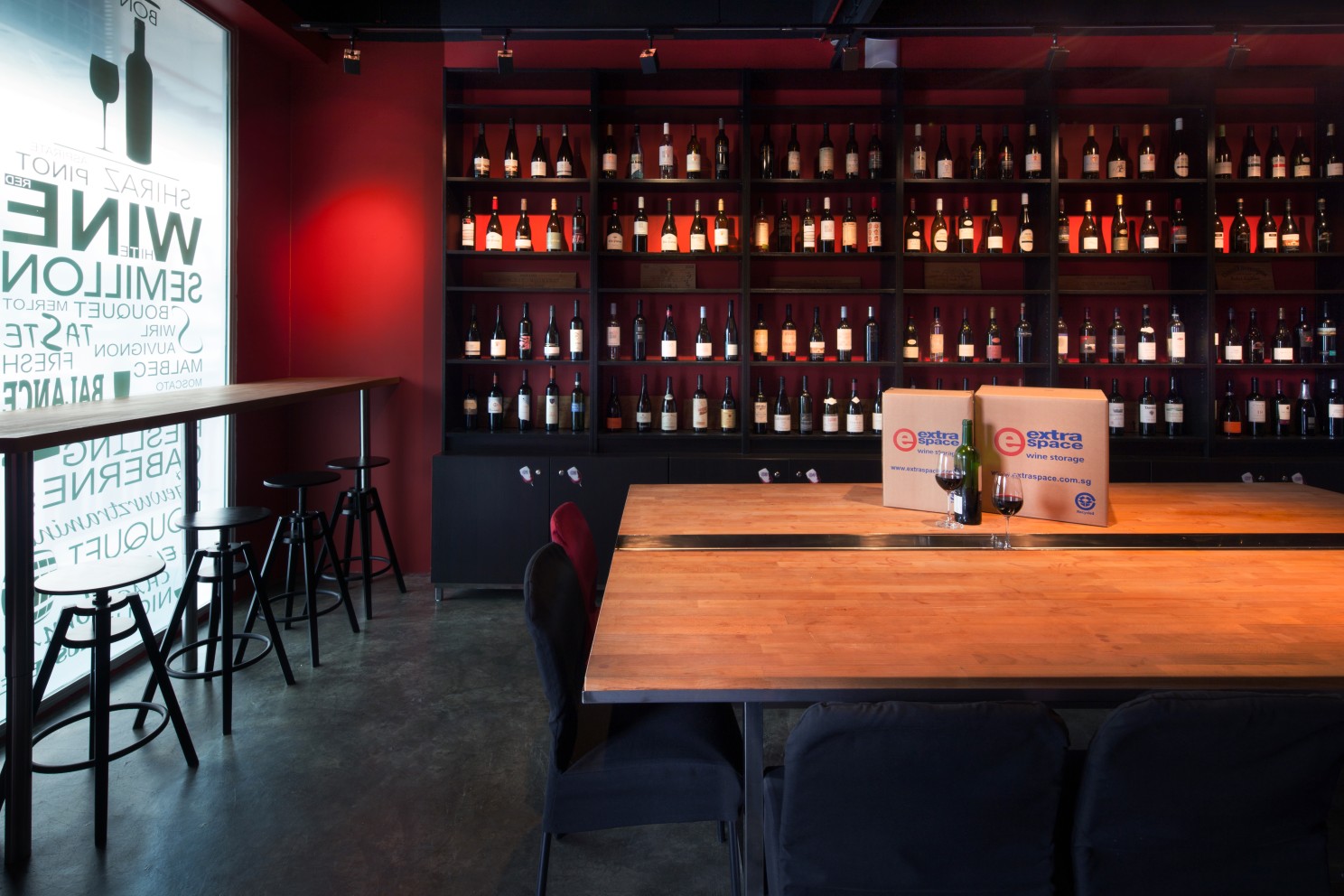
Urbanisation and smaller living spaces drive demand for flexible storage solutions that cater to diverse needs. Pictured here is a wine tasting room at one of ESA’s seven walk-in cellars in Singapore.
The opportunities in this sector are vast – from converting underutilised spaces into profitable storage units to incorporating advanced technology for enhanced customer experience.
One of ESA’s competitive advantages, Faith points out, is the prime locations of its facilities. “Our facilities provide convenient, accessible storage near where customers live or work, complemented by features such as climate control, advanced security systems, and plug-and-play[2] workspaces tailored for startups, entrepreneurs, and SMEs.”
Despite these strengths, market saturation is increasing. To maintain a competitive edge, ESA utilises data analytics to better understand customer behaviour and implements smart technologies aimed at improving service delivery.
Faith highlights how ESA embeds technology into its business practices to enhance customer experience:
“We have a small data team to conduct a thorough analysis of data from various touchpoints such as the chatbot, website, and social media platforms to allow us to gain insights into customer interactions at different times of the day and on various days of the week. This data-driven approach helps us to tailor our services to meet customer needs, even outside of regular operating hours,” explains Faith.
She adds, “We are committed to embedding innovation in our facilities, such as smart building features and a robust cybersecurity framework, including surveillance and firewall endpoints.” ESA has also obtained cybersecurity certification from the Cyber Security Agency of Singapore.
These technological advancements were made possible through funding grants from CapitaLand Innovation Fund (CIF). Established in late 2021, CIF is a S$50 million fund dedicated to fostering a culture of innovation and supporting test beds and proof-of-concept projects across CapitaLand’s global portfolio. To date, CIF has supported or is currently supporting 100 pilot projects under the themes of Sustainability, Digital Transformation, Operational Excellence, and Customer Experience.
Faith notes that her role as a CIF committee member has been instrumental in driving innovation at ESA. “Being part of CIF has provided valuable insights into cutting-edge technologies and solutions within the CapitaLand Group. This exposure has encouraged me to promote a culture of innovation at ESA, inspiring teams to explore new ideas and implement improvements that enhance both customer experience and operational efficiency.”
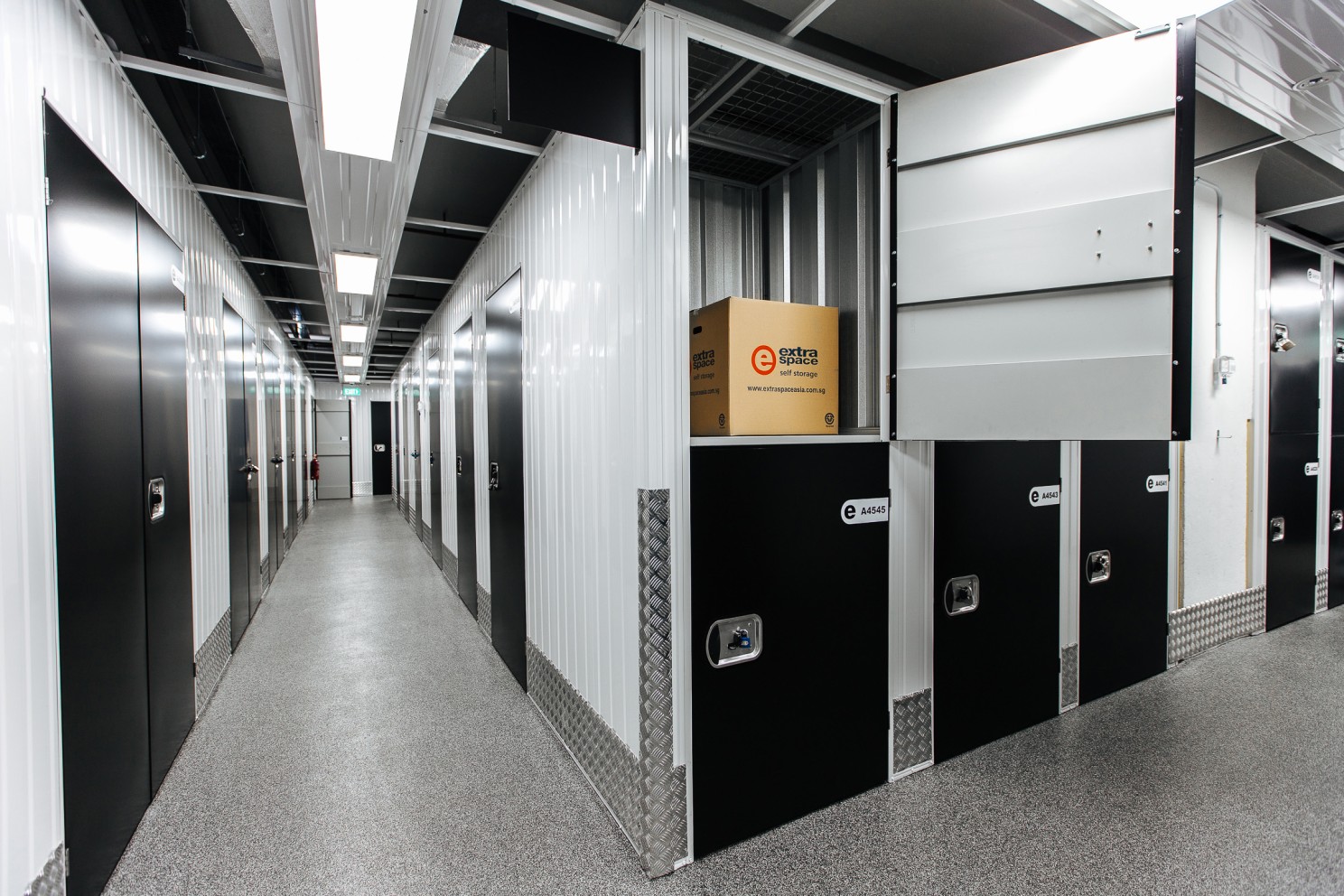
ESA focuses on well-located brownfield opportunities by converting industrial properties and acquiring ready-built facilities.
Faith also shared insights on the considerations and approaches in expanding ESA’s operations. “When evaluating new properties, we prioritise brownfield opportunities that are appropriately sized and strategically located near transportation hubs, industrial areas, commercial buildings, and residential catchment. This approach enables us to serve a diverse range of customers, from individuals to SMEs and e-commerce businesses, maximising utilisation rates,” she explains.
There are significant opportunities in converting industrial assets, acquiring ready-built facilities, and developing new sites for self-storage. “Our strategy focuses on markets with high urbanisation and strong demand for storage solutions, such as Singapore, Japan and South Korea. For example, the two industrial assets that we acquired in Singapore have been successfully converted into self-storage facilities,” Faith shares.
“The conversion process is well-structured and has been refined over time. Typically, it takes about six to eight weeks to convert a property, including rejuvenating the facade and improving the common areas. Larger buildings may require three to four months. Our extensive experience combined with predefined design templates, allow us to execute conversions efficiently while adapting to the specific needs of each location,” she notes.
Sustainability remains a key priority for ESA. “We are the first self-storage operator in Southeast Asia to achieve the EDGE Green Building certification, which is also recognised by GRESB. Over 80% of our owned buildings hold this certification. Through eco-friendly initiatives and cost-effective strategies, we actively reduce energy use, water consumption, and embodied carbon in materials. These efforts underscore our dedication to setting new benchmarks for greener storage solutions while highlighting our leadership in sustainable practices,” says Faith.
These initiatives have led to significant cost savings and align with ESA’s broader commitment to reducing its environmental footprint and promoting sustainable operations. This focus also supports CLI’s Net Zero ambition, in line with its 2030 Sustainability Master Plan.
With evolving consumption patterns and changing business requirements, the self-storage sector is poised for continued growth. CLI plans to further scale the ESA platform through mergers and acquisitions as well as converting existing assets into self-storage facilities.
[1] Information obtained from SSAA Annual Survey 2024.
[2] Currently only available at the Commonwealth facility.