


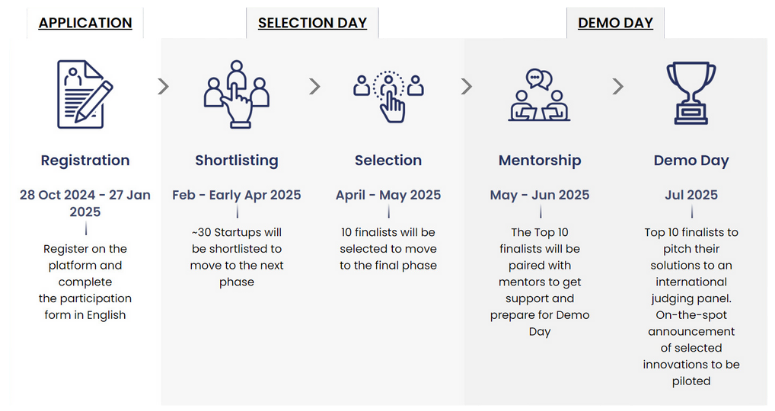
Witness ten outstanding shortlisted entries from around the world pitch in the style of “Demo Day” for an opportunity to pilot their innovations at selected CapitaLand properties worldwide. In addition, there will be four special recognition awards (High Impact Award; Most Innovative Award; Enterprise Singapore’s Most Scalable Award; and Enterprise Singapore’s Emerging Startup Award) given out with funding of over S$1 million to cover the cost of test bedding all the selected innovations. Thanks to the collaboration with more than 70 international institutional partners, we have received over 900 entries from more than 90 regions.
CapitaLand Sustainability X Challenge 4th Edition
10 July 2025 (Thursday) | 2pm to 5.30pm (GMT+8)
If you are unable to view the video here, please try viewing directly on YouTube here.

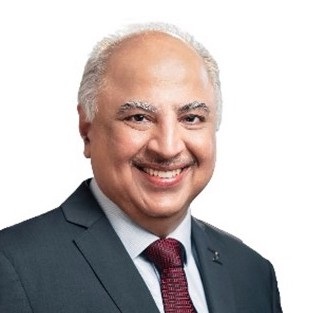
Mr Manohar Khiatani
Senior Executive Director
CapitaLand Investment
Read more

Ms Yvonne Voon
Partner
Fifth Wall
Read more

Ms Magdalene Loh
Director, Urban Solutions & Sustainability
Enterprise Singapore
Read more
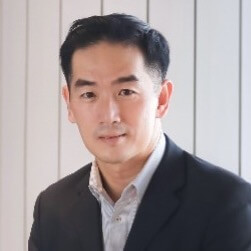
Mr Tan Chee Kiat
Deputy CEO (Industry Development)
Building & Construction Authority
Read more

Mr Magnus Grimeland
Founder and CEO
Antler
Read more
BUILD
CHALLENGE DESCRIPTION
On-Site Clean Energy
On-site clean energy presents an opportunity for building owners to diversify their energy sources and minimise carbon emission. Clean energy can be generated from waste heat recovery, solar thermal collection, photovoltaic panels, wind turbines, etc.
While technological advancements have raised standards on safety and performance, not all solutions can be cost effectively deployed at all locations due to varying reasons (e.g., minimum system size for deployment, low solar irradiance).
Reduced Energy Consumption
Low-energy buildings are characterised by energy-efficient design and systems that provide high standards of occupant comfort at low energy consumption. A combination of passive strategies (e.g., solar shading, natural ventilation, daylighting), active strategies (e.g., energy efficient HVAC, energy efficient artificial lighting), and energy management (e.g., building automation, smart control, and plug-load management) can be adopted to significantly reduce an existing building energy consumption. However, not all solutions can be effectively deployed at an existing building given its site constraints.
CapitaLand seeks innovations and technologies that can push the boundaries of on-site clean energy generation or energy efficiency in buildings as we strive towards super-low energy and beyond the highest rating in national green building standards across the globe in an efficient, effective commercially viable, and safe manner considering the limited space for deployment within our existing assets.
PAIN POINTS
A.01 Limited space for on-site installation at existing building and competing use of said limited space (e.g., urban farming versus solar panel installation)
A.02 Limited availability of renewable energy sources at certain properties (e.g., properties in urbanised area might have limited opportunity for wind power or thermal power)
A.03 Limited cost effective and efficient technologies to harness renewable energy
A.04 Costly to further improve energy efficiency of assets that are already fairly energy efficient (e.g., buildings that have already attained national level green ratings)
A.05 Existing portfolio of buildings with different HVAC systems (e.g., buildings with mixture of centralised and split units, buildings with only split units) and varied building management systems
A.06 Existing portfolio of buildings in various stages of energy efficiency
A.07 Limited opportunities to improve energy efficiency due to site constraints (e.g., age of the asset, legacy plantroom, legacy building systems, etc.)
A.08 Hard to achieve optimal indoor thermal comfort conditions due to varying weather conditions, layouts, occupancy and individual thermal comfort preference
SOLUTION REQUIREMENTS
We seek solutions for on-site clean energy generation and reduced energy consumption for the portfolio of CapitaLand's assets that meet the relevant following requirements::
- Occupant experience - occupants' comfort and experience in the building are not compromised
- Small installation footprint - suitable for installation within limited space available in our existing properties
- Carbon reduction - measurable reduction in carbon emission
- Cost efficient - strong financial benefits relative to its cost
- Measurable and trackable - clear calculation methods of energy consumption and auditable data
- Relative ease of implementation - implemented with minimal disruption to business operations
- Ready to pilot - at least Technological Readiness Level 8 with proof of implementation
OPPORTUNITY AREAS
Opportunity areas include but are not limited to:
- Recovery of waste heat
- Building integrated solar PV or modular PV panels of high-capacity output or co-location of solar PV with rooftop farming
- Best in class energy efficient solutions that optimise heating, ventilation, and air-conditioning (HVAC) and lighting
- Efficient energy management
CHALLENGE DESCRIPTION
Water scarcity and poor access to potable water have driven building owners to search for alternate sustainable source of water. Greywater can be reclaimed for reuse. Rainwater can also be harvested and treated for higher value usage. However, integration of such alternate water supplies into existing properties typically require significant retrofitting of pipes and storage systems.
CapitaLand would like to explore innovative solutions and technologies to optimise the use of water and maximise alternative sources of water while taking into consideration the existing piping and infrastructure in our existing buildings
PAIN POINTS
B.01 Limited space for water storage and additional treatment in existing buildings
B.02 Difficult and costly to install additional water piping system for alternate water sources (e.g., recycled greywater, treated rainwater) or challenging regulatory requirements
SOLUTION REQUIREMENTS
We seek solutions to reduce the water footprint of CapitaLand's properties that meet the following requirements:
- Ease of integration in existing buildings - collection, piping, and treatment of water without major retrofit works
- Small installation footprint - suitable for installation within limited space available in our existing properties
- Cost efficient - strong financial benefits relative to its cost
- Energy efficient/low carbon - low carbon footprint and consume reasonable amount of energy
- Ready to pilot - at least Technological Readiness Level 8 with proof of implementation
OPPORTUNITY AREAS
Opportunity areas include but are not limited to:
- Water efficiency measures
- Greywater / rainwater harvesting for uses beyond irrigation, (e.g., toilet flushing and shower)
CHALLENGE DESCRIPTION
Waste segregation is an integral part of proper waste management that requires cooperation from multiple stakeholders along the value chain. Waste from building occupants and users such as guests in serviced apartments, shoppers and tenants in shopping malls, and tenants in office buildings present an untapped potential for reuse and circularity.
Venturing beyond the existing take-make-waste economic model, a circular economy (also referred to as “circularity”) is a concept aimed at overall limiting waste and promoting the continual use of resources. It employs rethink, reduce, re-use, repair, refurbish, recover, and recycle to create a closed-looped economic system. There could similarly be opportunities for circularity for construction waste.
CapitaLand seeks innovations to reduce pressure on environment, improve security of raw materials supply, and deliver long term economic value. Currently, the challenges faced include forging the right partnerships to create an ecosystem for segregation, circularity, and solutions that can cost effectively minimize or repurpose one's waste into high-value products.
PAIN POINTS
C.01 Limited options to recycle or reuse or repurpose waste into higher value products
C.02 Limited space to implement recycling equipment due to large footprint.
C.03 Lack of traceability and verification processes on origin of waste
C.04 Lack of incentives for stakeholders to identify technologies and solutions that establish partnerships with other companies and create the close-looped circular system
C.05 Hard to implement effective measures to influence behaviour and habits of users (e.g., waste segregation or recycling in serviced apartments, tenants in shopping mall)
C.06 Lack of means to clearly measure and demonstrate the benefits of waste segregation (e.g., food and non-food waste, recyclables and non-recyclables)
C.07 Difficult to enforce waste segregation even if it is a mandatory requirement
C.08 Labour intensive process during backend waste sorting if segregation is not performed properly at source
C.09 Lack of incentive and motivation for customers to cooperate and play their part on waste segregation
C.10 Existing solutions are either low impact (i.e., recycling bins) or too expensive to implement (i.e., AI/robotic waste segregation)
SOLUTION REQUIREMENTS
We seek solutions to improve the efficacy of recyclable waste (e.g., food waste, plastic waste) segregation at source for the portfolio of CapitaLand's properties that meet the following requirements:
- Call to action - solutions that include educating and engaging stakeholders in waste segregation
- Measurable and trackable - clear calculation methods and auditability of data
- Cost efficient - strong financial benefits relative to its cost
- Carbon reduction - measurable reduction in carbon emissions
- Enhanced ecosystem for circularity - Partnerships, programs, platforms and/or solutions to close the loop
- Ready to pilot - at least Technological Readiness Level 8 with proof of implementation
OPPORTUNITY AREAS
Opportunity areas include but are not limited to:
- Cost effective solutions to detect waste that are not recyclable and/ or contaminated at source
- Cost effective solutions to detect and separate waste that are not recyclable and/ or contaminated post collection
- Incentive and engagement models that could positively influence user behaviours
- Platform for circularity
- Waste tracing, monitoring and management
- On-site solutions to generate higher valued product from waste
- New uses for construction and other waste generated in the buildings
CHALLENGE DESCRIPTION
The lifecycle carbon of a building is typically 30% embodied vs. 70% operational. In areas with shorter building lifespans, this can shift to 40% vs 60%. To reduce the overall carbon footprint during construction or asset enhancement, CapitaLand would like to explore technologies which would result in reduction of embodied carbon. As a developer and asset owner there are opportunities to incorporate new construction tools, low embodied carbon materials in construction of new assets and during the enhancement of existing assets.
PAIN POINTS
D.01 Difficult to test and verify low embodied carbon materials
D.02 Difficulty in overcoming regulatory hurdles for construction-based low embodied carbon materials
D.03 Lack of clear economic incentives to adopt low embodied carbon materials
SOLUTION REQUIREMENTS
We seek solutions for new construction technologies and methodologies, and low embodied carbon materials in construction of new assets and enhancement of existing assets:
- Digital Design to Advance Sustainability Performance - New digital design tools incorporate criteria such as comfort (wind, daylight, acoustics), quality (views, social safety), and sustainability (embodied carbon, biodiversity improvements). These tools enable design iterations that achieve the project's sustainability goals. Advanced software optimises all design stages to enhance overall sustainability performance in CapitaLand's projects
- Plan for Whole-Life Carbon - Real estate industry must shift toward a whole-life carbon perspective to drive long-term business success in an increasingly sustainability-focused market. Potential innovative solutions and best practices for integrating whole-life carbon considerations into real estate projects to mitigate climate-related risks, and reduce projects' whole-life carbon impact to meet regulatory requirements, investor expectations, and tenant preferences
- Innovative Construction Methodologies - Construction materials and resources account for the majority of a project's carbon footprint. Ways construction methodologies and processes can be innovated to significantly diminish water, waste, and energy usage across CapitaLand's constructions and developments
- Ready to pilot - at least Technological Readiness Level 8 with proof of implementation
OPPORTUNITY AREAS
Opportunity areas include but are not limited to:
- New technology to advance sustainability performance
- Low embodied carbon materials for construction or asset enhancement initiatives/refits
- Innovative construction methodologies
ENABLE
CHALLENGE DESCRIPTION
Occupational Health & Safety
Occupational Health & Safety (OHS) is critical because your first mistake could be your last and all it takes is just 5 seconds. Hence, stringent processes are implemented to assure OHS. Permit processes are established to provide additional protection for hazardous work. Training is provided to uplift OHS knowledge and skills. Inspections are done to “find the problem before it finds us”. OHS dashboards provide leaders with important indicators to drive performance. In addition, there is the human element where OHS often needs to be enforced to ensure that OHS is done, is done right, and is done always. How can technology enhance OHS, or help to simplify and improve OHS performance including OHS in operational buildings or construction projects?
Wellness
Wellness of users is affected by outdoor air quality (e.g., haze, air pollution), building management practices (e.g., selection of building materials, air treatment in air-conditioned space) and occupant behaviour (e.g., preference in keeping doors/windows open). In the post-pandemic world, wellness is top of mind for management and tenants.
Many solutions focus only on the IAQ component of wellness through monitoring and improving IAQ but are mainly effective in small, enclosed areas or neglect further wellness features. CapitaLand owns and manages different types of assets with characteristics such as large indoor space, multiple building entrances and high footfall, making it challenging to monitor and control IAQ. Green building design with extensive naturally ventilated common areas and multiple entrances to air-conditioned tenanted spaces may also increase possibility of polluted outdoor air infiltration.
While CapitaLand has deployed measures like IAQ sensors, high grade air filters, purging system, ultraviolet germicidal irradiation air handling units to monitor and improve IAQ at our properties, CapitaLand continues to look for innovations to enhance the wellness of our building occupants and users.
PAIN POINTS
E.01 Limited space for on-site installation in existing buildings
E.02 Limited cost effective and proven technologies
E.03 Hard to quantify the benefits
E.04 Numerous OHS processes can be burdensome as they may be labour-intensive, and difficult to track due to manual and paper-driven processes
E.05 Much OHS data can be collected, but can that data be used effectively to realistically predict OHS trend?
E.06 Restricted implementation of OHS technologies in remote sites without internet connection
E.07 Not all solutions that benefit IAQ are energy efficient or have low carbon footprint
E.08 Small coverage area and/or poor accuracy of IAQ sensors/solutions
E.09 Hard to control human behaviour (e.g., PM2.5 is higher when the window is always opened)
E.10 Difficulty to reduce outdoor air infiltration through building entrances without compromising the building design
SOLUTION REQUIREMENTS
We seek solutions to improve the monitoring, visualisation and/or treatment of IAQ for the portfolio of CapitaLand's properties that meet the following requirements:
- Occupant experience - improve occupant comfort, wellness, and experience in the building
- Ease of integration with existing buildings - no major retrofit works required and able to work in spaces where there is frequent infiltration of outdoor air
- Small installation footprint - suitable for installation within limited space available in our existing properties
- Energy efficient/low carbon - low carbon footprint and consumes a reasonable amount of energy
- Measurable and trackable - clear computation of benefits and auditable data
- Cost efficient - strong financial benefits relative to its cost
- Ready to pilot - at least Technological Readiness Level 8 with proof of implementation
OPPORTUNITY AREAS
Opportunity areas include but are not limited to:
- Augmented reality / Virtual reality (AR/VR) for safety training, including smart glasses
- Video analytics (VA) for safety enforcement
- Artificial Intelligence (AI) for predictive safety
- IOT sensors for deployment e.g., work-at-height activities such as high-rise maintenance and cleaning
- Cloud solutions for accessibility
- Robotics, Drones
- IOT solutions that are effective and accurate over wide coverage area for monitoring and visualising IAQ and infiltration of outdoor air
- Air Handling Units enhancements
- IAQ treatment
CHALLENGE DESCRIPTION
CLI will transit to a low-carbon business aligned with climate science, with targets validated by SBTi. CLI is focusing on decarbonising its Scope 3 GHG emission, which attributed close to 70% of CLI’s total carbon footprint. Purchased goods and services which are part of its supply chain emissions, made up about ~9% of CLI's total Scope 3 emissions in 2023. We seek effective initiatives to help better baseline and reduce these indirect emissions, while maintaining operational efficiency and meeting customer expectations.
PAIN POINTS
G.01 Derivation of suppliers’ product/service carbon footprint. This should then translate to comparable and usable data for tracking and disclosure. With a wide spectrum of supply chain companies, this requires understanding of its specific industry. There are multiple platforms claiming to help track carbon emissions of suppliers, but are unable to attribute the relevant portion to the clients for their Scope 3 emissions tracking. We prioritise common services such as cleaning, security, and mechanical & engineering services in our operational buildings.
G.02 Complex data collection and measurement processes – Procurement data is large and diverse, and it is time-consuming to match transaction lines to the appropriate activity type and emissions factors in order to compute Scope 3 emissions from supply chain
SOLUTION REQUIREMENTS
We seek effective initiatives to baseline and help set practical targets to reduce these indirect control emissions, while maintaining operational efficiency and meeting customer expectations:
- Occupant experience - occupants’ comfort and experience in the building are not compromised
- Cost efficient - strong financial benefits relative to its cost
- Measurable and trackable - clear calculation methods of energy consumption and auditable data and meeting international standards
- Relative ease of implementation - implemented with minimal disruption to business operations
- Ready to pilot - at least Technological Readiness Level 8 with proof of implementation
OPPORTUNITY AREAS
Opportunity areas include but are not limited to:
- Cloud solutions for accessibility
Judging Criteria
The projects were assessed following the criteria below:
1. Impact & Business Value for CapitaLand
2. Innovation & Creativity of solution to meet the problem statements
3. Potential to Scale and deploy across the different geographies and asset types of CapitaLand’s properties
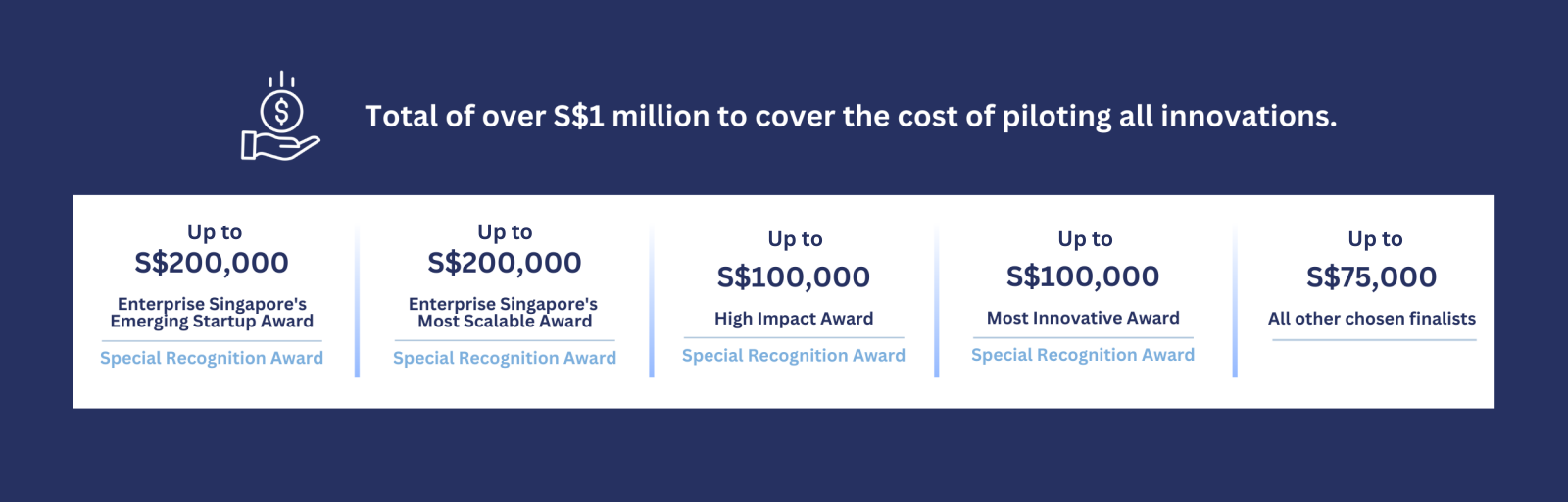
🏆High Impact Award: Gaiamesh is a plug-and-play AIoT control system that empowers commercial and industrial buildings to reduce energy consumption by up to 30% through intelligent, wireless automation
🏆Most Innovative Award: HydroVigor transforms ordinary building water tanks into scalable, 24/7 micro hydropower plants, recovering waste energy from everyday water use
🏆Enterprise Singapore’s Most Scalable Award: MireCool Energy-saving Additive by Miredo Asia is a safe & proven energy-saving additive engineered for easy application to chilled water and boiler loops of HVAC systems
🏆Enterprise Singapore’s Emerging Startup Award: ENVI-GEL 365 rPET is a thin-film thermal membrane engineered for versatile applications.
CapitaLand Sustainability X Challenge 2023 Demo Day
& Launch of Built Environment Innovation Hub @ BCA Braddel Campus
26 October 2023 (Thursday) | 2.30pm to 6pm (GMT+8)
If you are unable to view the video, please check your connection settings or click here to watch directly from our YouTube channel.
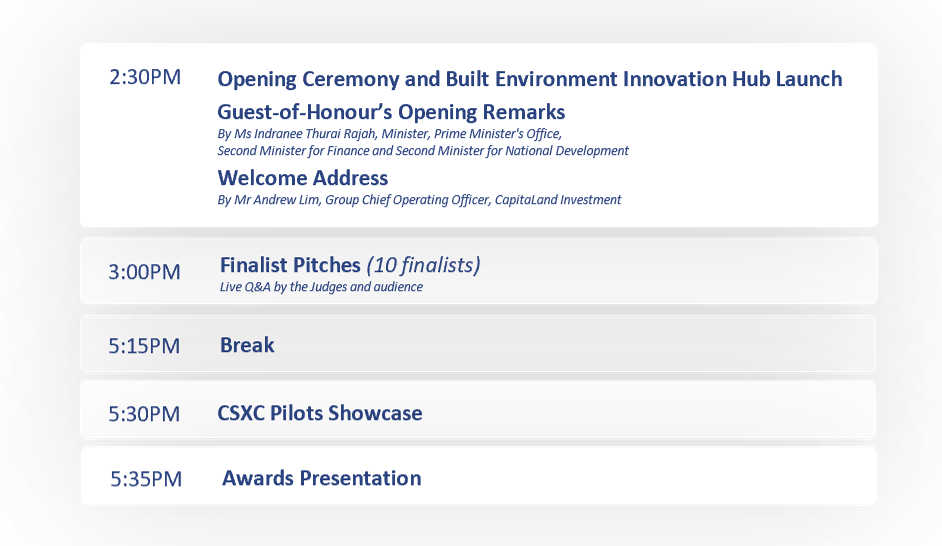

Ms Indranee Thurai Rajah
Minister, Prime Minister's Office, Second Minister for Finance and Second Minister for National Development
Read more

Mr Anthony Lim Weng Kin
Lead Independent Director and Non-Executive Independent Director, CapitaLand Investment
Read more

Ms Christine Wong
Executive Director, Urban Solutions and Sustainability, Enterprise Singapore
Read more

Ms Lucy Thomas
Chief Scientist of RSK Group, Director of RSK’s Centre for Sustainability Excellence in Singapore & RSK’s operations in Africa
Read more

Mr Markus Bruderer
Partner, Antler
Read more

Mr Quentin Vaquette
Founding Partner, Wavemaker Impact
Read more
CapitaLand Sustainability X Challenge 2022 Demo Day
20 July 2022 (Wednesday) | 2.30pm to 5.30pm (GMT+8)
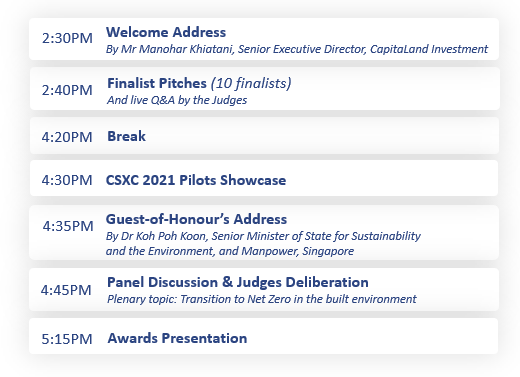
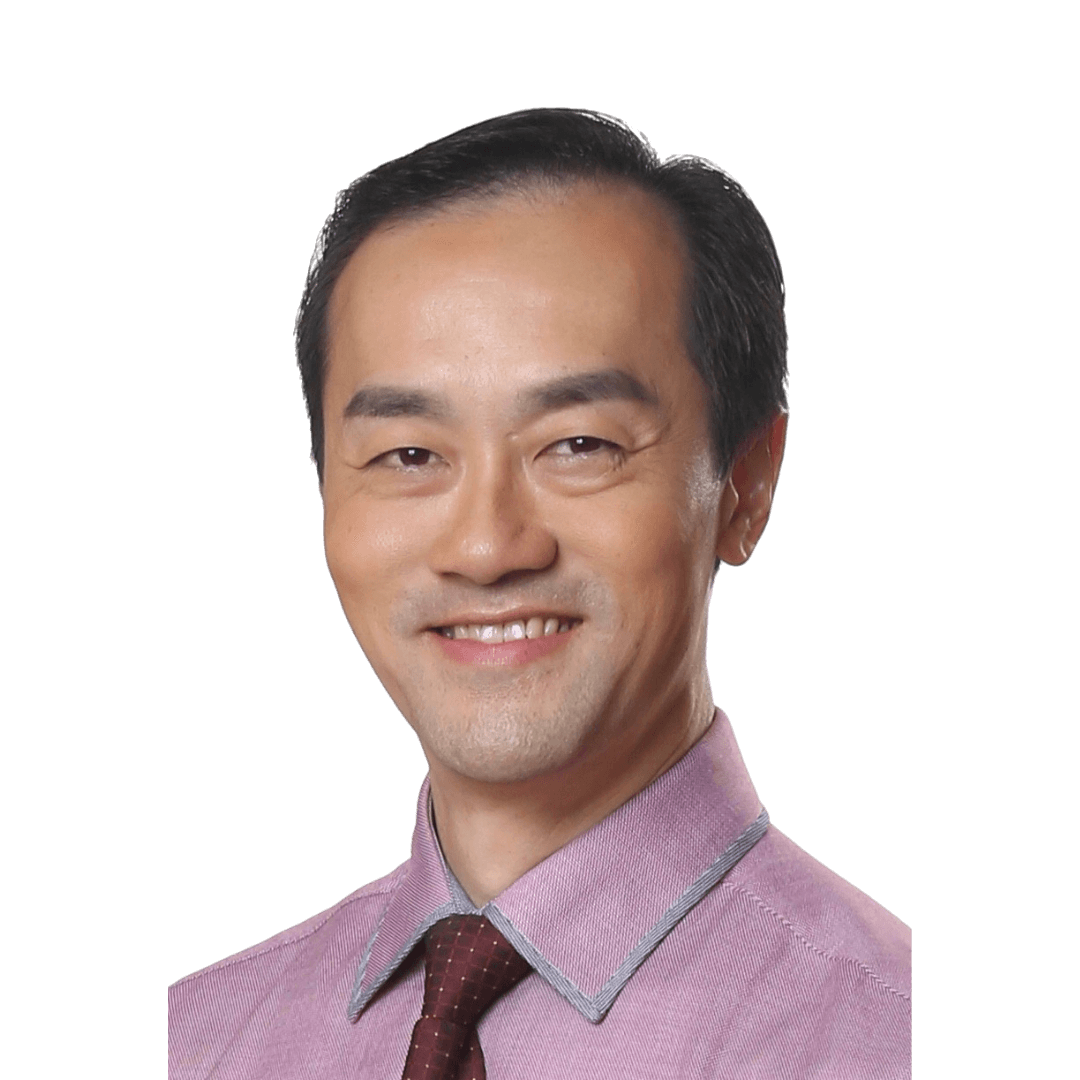
Dr Koh Poh Koon
Senior Minister of State for Sustainability and the Environment, and Manpower, Singapore
Read more
Topic: Transition to Net Zero in the Built Environment
.png)
Ms Lynette Leong
Chief Executive Officer, Environment, Social & Governance Funds & Stewardship, CapitaLand Investment
Read more
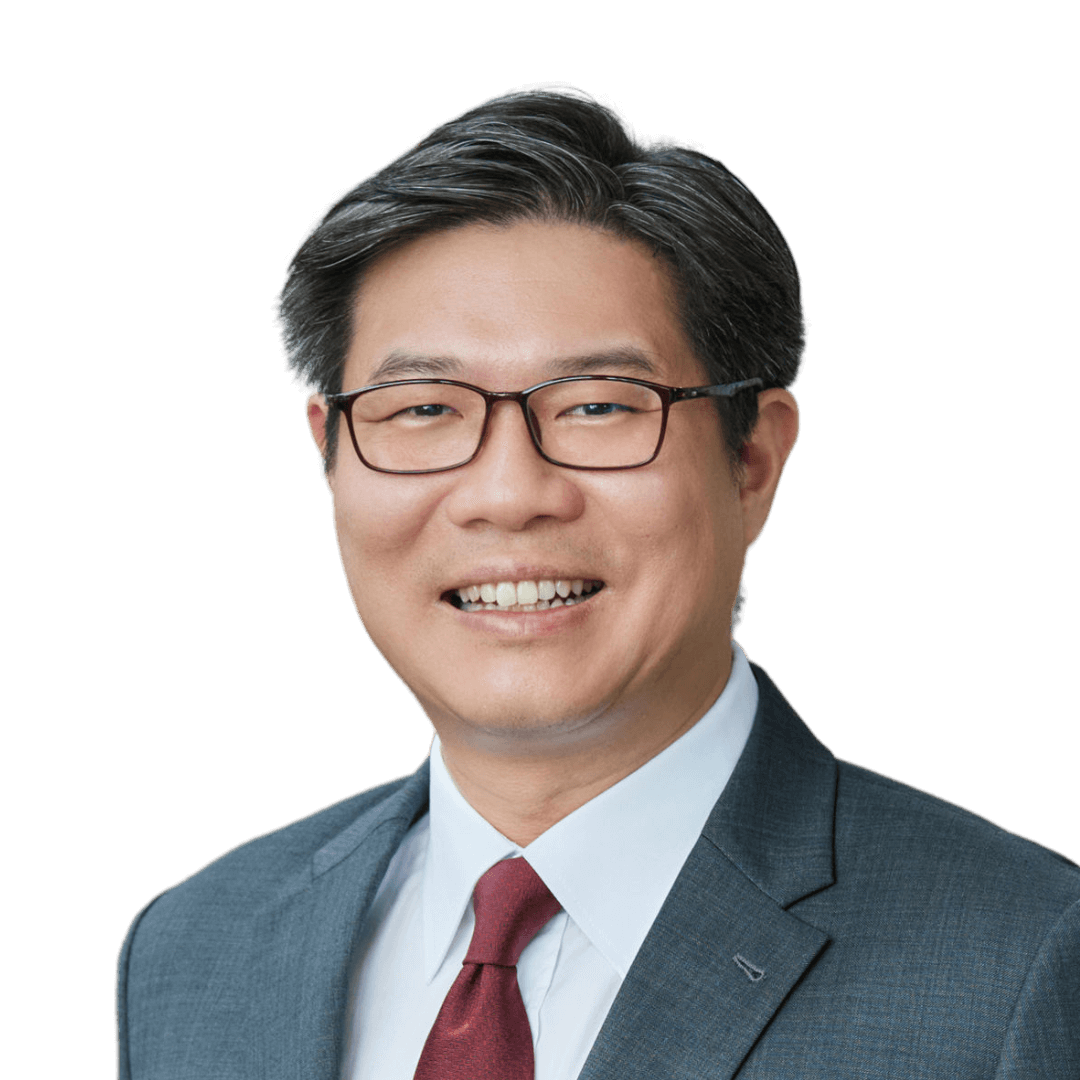
Mr Frederick Teo
Chief Executive Officer, GenZero
Read more

Ms Marie Cheong
Founding Partner, Wavemaker Impact
Read more
Mr Rohit Sipahimalani
Chief Investment Officer & Head, South East Asia, Temasek
Read more

Prof Cheong Koon Hean
Practice Professor & Chair of the Lee Kuan Yew Centre for Innovative Cities (Singapore University of Technology & Design) & Chair of the Centre for Liveable Cities’ Advisory Panel (MND)
Read more

Mr David Su
Founding Managing Partner of Matrix Partners China & Non-Executive Independent Director, CapitaLand Investment
Read more

Ms Huey Lin
Venture Partner, GGV Capital
Read more

Mr Jeffrey Paine
Co-founder & Managing Partner, Golden Gate Ventures
Read more
Dr Jon Creyts
Managing Director and Chief Program & Strategy Officer, Rocky Mountain Institute
Read more

Ms Lucy Thomas
Chief Scientist of RSK Group, Managing Director of RSK’s Centre for Sustainability Excellence in Singapore & RSK’s operations in Africa
Read more
Industry experts globally from CapitaLand and the following partners were also involved in the shortlisting and selection process.
CapitaLand Sustainability X Challenge 2021 Grand Finale
11 June 2021 (Friday) | 4pm to 6.30pm (GMT+8)
From 10 November 2020 to 17 February 2021, the CapitaLand Sustainability X Challenge (CSXC) called for proposals across the globe to make buildings more climate-resilient and resource-efficient. Six outstanding submissions have been selected from over 270 entries across more than 25 countries. The six finalists are being mentored by CapitaLand business leaders and senior leaders from CSXC’s strategic partners. The finalists are also given access to potential investors through CSXC global partners’ sustainability and innovation platforms.
At the Grand Finale held on 11 June 2021, two winners walked away with an exclusive opportunity to pilot their solutions with CapitaLand, while securing up to S$50,000 in project funding. In addition, they will also have the chance to showcase their innovations to senior global business leaders, investors and policymakers at the annual Ecosperity Week organised by Temasek.

Most Innovative Award
Climatec Corp Pte Ltd (Singapore)
- ClimaControl Quantum Resonance Water - Revolution in cooling tower water treatment
- Challenge Statement #2 How might we achieve significant reduction in energy consumption for existing buildings?

High Impact Award
INOVUES, Inc. (United States of America)
- Adaptive Glazing Shield, revitalizing windows for enhanced energy efficiency
- Challenge Statement #2 How might we achieve significant reduction in energy consumption for existing buildings?


Climatec Corp Pte LtdClimaControl - Revolution in cooling tower water treatment by Climatec Corp Pte Ltd – A chemical-free treatment process for cooling tower water to reduce scaling and increase cycles of concentration.
Climatec Corp Pte LtdClimaControl - Revolution in cooling tower water treatment by Climatec Corp Pte Ltd – A chemical-free treatment process for cooling tower water to reduce scaling and increase cycles of concentration.
Climatec Corp Pte LtdClimaControl - Revolution in cooling tower water treatment by Climatec Corp Pte Ltd – A chemical-free treatment process for cooling tower water to reduce scaling and increase cycles of concentration.

Ms Grace Fu
Singapore’s Minister for Sustainability and the Environment
Read more
Mr Lee Chee Koon
Group Chief Executive Officer, CapitaLand Group
Read more

Ms Goh Swee Chen
Swee Chen is Chairman, National Arts Council and National Technological University (NTU). She joined Shell in 2003 and retired as Chairman, Shell Companies in Singapore in January 2019. She was previously with Procter & Gamble and IBM. A global leader, she has lived and worked in Singapore, Malaysia, Netherlands, Australia, USA, Japan and China. Swee Chen has a diverse professional background, having led significant businesses in Oil & Gas, Consumer Goods and IT sectors.
Swee Chen serves on the Boards of CapitaLand, Singapore Airlines, SP Group, Woodside Energy (Australia) and Centre for Liveable Cities. She is President - Global Compact Network Singapore, a UNGC Local Network and chairs the Institute for Human Resource Professionals. She is also a member of the Legal Services Commission.
Swee Chen had previously chaired/served in the Boards of Shell Joint Ventures in China, Korea and Saudi Arabia.
Swee Chen graduated with B.Sc. - Victoria University and MBA - Chicago Booth, University of Chicago. She was named Distinguished Alumni, Chicago Booth, in 2018. She is married with three children.
Read more
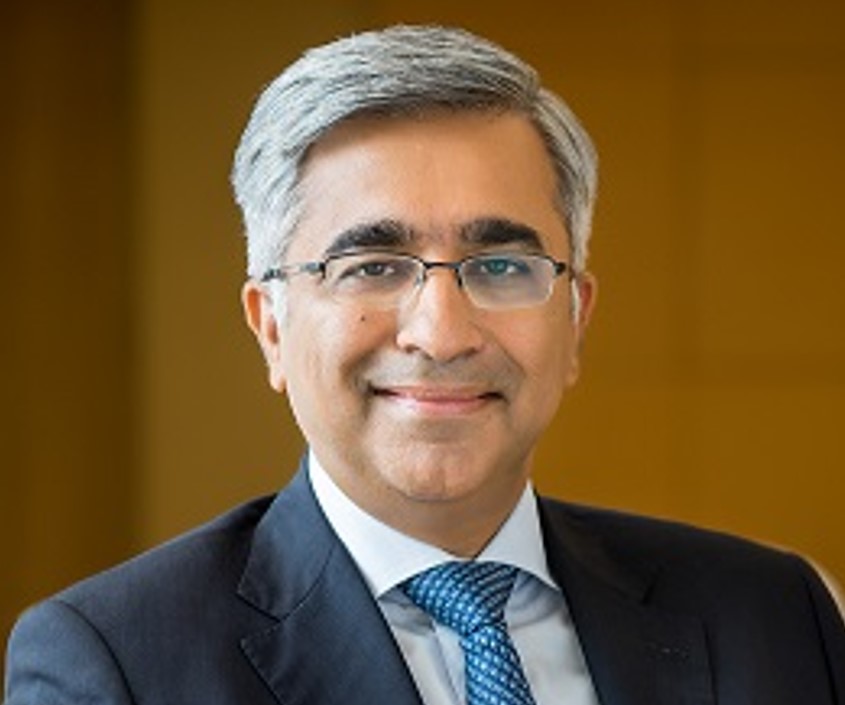
Mr Rohit Sipahimalani
Chief Investment Strategist and Head, South-East Asia, Temasek
Read more

Dr Cheong Koon Hean
Chair of the Centre for Liveable Cities (MND) and the incoming Chair of the Lee Kuan Yew Centre for Innovative Cities (Singapore University of Technology and Design)
Read more
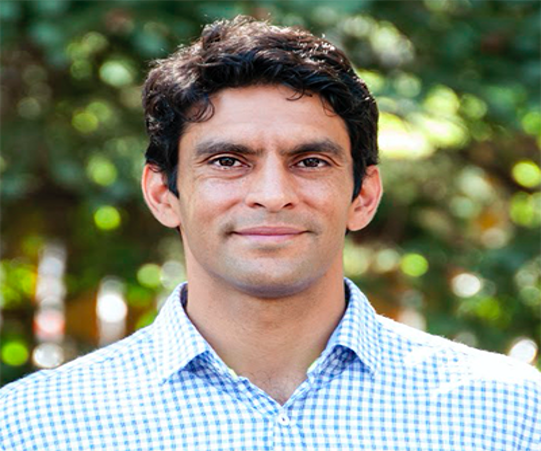
Mr Rushad Nanavatty
Managing Director, Urban Transformation, RMI
Read more
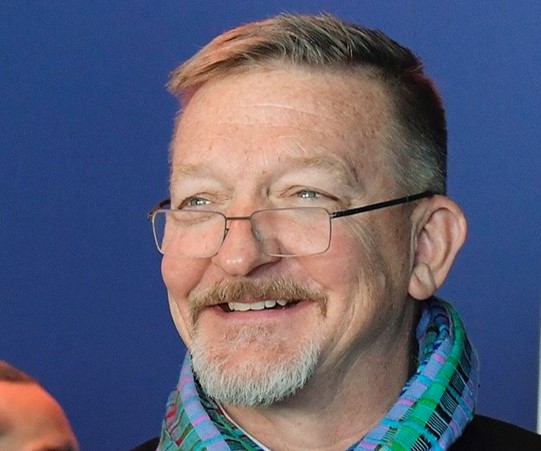
Dr Chris Luebkeman
Head of Strategic Foresight, ETH Zurich
Read more

Ms Lynette Leong
Chief Sustainability Officer, CapitaLand Group
Read more
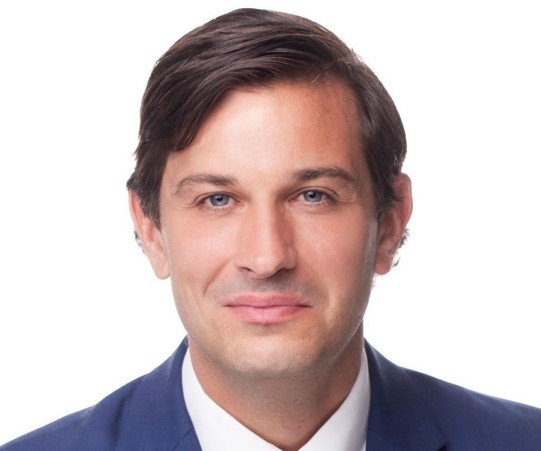
Mr Ben Powell
Chief Investment Strategist for APAC, BlackRock Investment Institute
Read more
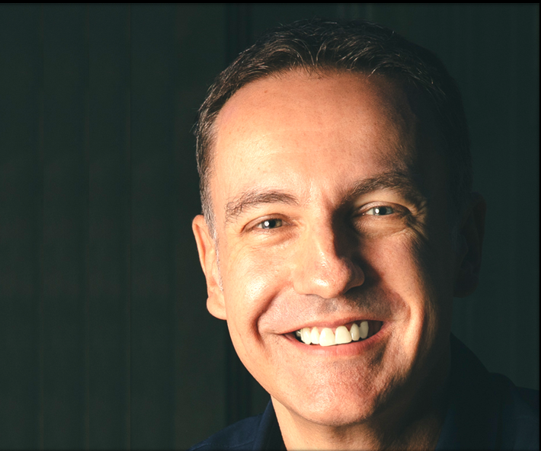
Mr Steve Melhuish
Founder, PropertyGuru and CEO, Planet Rise
Read more